... and Adolf.
Camello nazi en Pushkar. Nazi camel in Pushkar.

Olvidé subir esta foto curiosa.

I forgot to upload this curious pic.
Rishikesh: el pakora que me mató. The pakora that killed me. [05.10.2010-11.10.2010]

Vegeta & Pedro. De camino. On the road.
Helen y Vegeta se bañan estilo indio: con toda la ropa. Helen and Vegeta took a bath in indian style: with all their clothes on.
Una de las cataratas pequeñas de camino hacia la grande. One of the small ones on the road to the big one.


Nos encontramos en la catarata con un baba en levitación. We ran into a levitating baba in the waterfall.
El baba no estaba solo, tenía un amigo tan tonto como él. The baba wasn't alone, he had a friend as silly as him.
Hombre aburrido en Rishikesh, frente al Ganges. Bored guy in Rishikesh, in front of the Ganges.

A ningún dios que se precie le gusta la arrogancia en el hombre. Y menos si ésta viene relacionada con atribuirse características exclusivas suyas. Aunque los hindúes no sean tan celosos y no sé si Yavhé  (que mejoró la mala leche tras ser papá) tiene jurisdicción en este lado del mundo, el declararme indestructible ha desencadenado el proceso inverso. Tras el post tuve una otitis. Una semana más tarde un resfriado. Y no había terminado esta fiesta germinal cuando me comí aquel pakora (verdura mezclada con masa y frita). A las horas tuve que hacerlo salir a la fuerza y los 5 días posteriores los he pasado de viaje de la cama al baño. Este ha sido mi descanso y aprentizaje de yoga en Rishikesh.
Por lo menos, entre el pakora y la enfermedad tuve tiempo de visitar las catarátas con Hellen (Korea) que me acompañaba desde Delhi, y Pedro (Brazil) y Vijayta (India) que conocimos en el bus.
Se me quedaron los ojos como platos, literalmente, cuando conocí a Vijayta (“¿¿¿Te llamas VEGETA????”). Esto después de descubrir que sal en hindi se dice Namek. Como pronunciación de Vijayta (Vidyeta) y Vegeta (Vedyita) cambia un poco, decidí llamarla siempre Vegeta. Vegeta es un personaje de unos dibujos animados.
Subimos más allá del camino para ver si encontrábamos más cataratas por el mismo precio (0,30Rs o 0,50€ y andar 20 minutos o media hora). Sólo encontramos una campesina que nos dijo que no había nada. Vajayta le preguntó si podía darnos de comer y dijo que claro aunque le dio vergüenza cuando le preguntamos por cuanto. Al final le dimos cada uno 50 Rs cada uno por el plato de arroz y dhal (lentejas), ambos cosechados en sus campos.

PS: Mamie, oui ça va, ne t’en fait pas.


No proper God likes arrogancy in human beings. And much less if it involves taking their exclusive attributtes as one‘s own. The hindu’s are not that jaleous and I don’t know if Yavhe (who improved his bad attitude after being father) has jurisdiction in this part of the world,but declaring myself indestructible has triggered the oposite process. After the post I had an ear infection. A week later I had a cold. And this germ party not being over I ate this pakora (deep fried vegetables mixed with batter). Few hours later I had to force it to go out and then stayed for 5 days travelling from my bed to the toilets. This has been my rest and my yoga learning in Rishikesh.
At least, between the pakora and the sickness I had enough time to visit Rishikesh waterfalls with Hellen (Korea), who was coming with me from Delhi, and Pedro (Brazil) and Vijayta (India), who we met on the bus.
My eyes were wide open when I met Vijayta ("Your name is VEGETA???"). This was soon after learning that salt is hindi is Namek. Since the name wasn’t exactly the same (Vijayta is ‘Veejehta’), I called her from then on Vegeta. Vegeta is a character in some cartoon series.
We went up more out of the path to see if we would find more waterfalls for the same price (0,50€ and 20 mins or half an hour of walk). We only found a peasant who told us there was nothing further on. Vajayta asked her if she could feed us and she agreed, however she felt shy when we asked how much should we give. We finally gave 50 Rs each for a dish of rice and dhal (lentils), both harvested in the surrounding fields.
Adolf and the swastikas
En la pered de una tienda, los dos símbolos auspiciosos más usados: la esvástica y el limón con chilly. On the wall of a store, the two more common auspicious symbols: swatika and lemon with chilly.

Niños haciendo cosas nazis. Children doing nazi stuff.
Una casa en Delhi. A house in Delhi.

Un camión en Delhi. A truck in Delhi.

Best seller. Tras hacer la foto me di cuenta de que a la derecha hay otro Mein Kampf. Visto en una librería en una estación de tren. After taking the picture I realised there was another Mein Kampf at the right. Seen in a bookshop ion the raillway station.


No, los traviesos alemanes no han vuelto. La esvástica, hecha famosa en Occidente por cierto señor con bigote, es un antiguo símbolo indio que da buena suerte. En la india, se suele ver con serif (para el que lo entienda) o con las puntas estilizadas, con un punto en medio de cada cuarto y sus aspas no son oblícuas. Se ponen  en cualquier sitio y muchas veces en cosas nuevas (coche, aire acondicionado…) para protegerlas. El que diga que no se llama esvástica (swastik en sánscrito) miente. El que diga que la del austríaco es al revés miente, el que diga que hacia un lado es buena suerte y hacia otro es una receta codificada de la mayonesa miente. Sólo hay una, sólo se diferencia en la inclinación.
En Ajmer ví una esvástica en el cartel de una tienda cuyo propietario quizás andaba confundido: usó la bandera tabú de fondo rojo, círculo blanco y aspas oblícuas. No hay foto, la ví desde el autobús.
Un hecho curioso es que este poderso símbolo ha sido usado independientemente por varias civilizaciones: hindús, celtas, egipcios, mayas. Suele significar los cuatro puntos cardinales, los 4 elementos básicos y/o una especie de rosa de los vientos.

En cuanto a Adolfo, es curioso ver cómo fuera de occidente no está satanizado. En India, su libro Mein Kampf (Mi Lucha) es un best seller. La primera vez que lo ví fue en la bolsa de la compra de cartón de una librería donde aparecía segundo entre un libro de Gandhi y otro de Lincoln. Aquí lo leen cómo libro de superación personal o de cómo conseguir el éxito. En Nepal, hablando de la política de este pais y de cómo no han funcionado los maoistas, un chico dijo que necesitaban a alguien fuerte, como Hitler si hiciera falta.


No, the naughty germans are not back again. The swastika, made popular in Western countries by some gentleman with moustache, is an antic indian symbol for good luck. In India, you can see it with serif (for whom can understand it) or with stylized ends, with a dot in the middle of each quarter and the cross are not oblique. They are put anywhere and many times in new things (car, aircon…) so they can be protected. Those who say its name is not swastika (swastik in sanscrit) are liers. Those who say that the one used by the austrian is in the oposite dirección direction are liars. Those who say that in a direction is a good luck simbol and in the oposite one is a codified récipe of mayonaise are liars. There is only one, the only difference is the inclination.
In Ajmer I saw a swastika in the banner of a shop whose Horner was maybe a bit confused: it was the taboo one with red background, white circle and oblique croos.
A curious fact is that this poweful symbol has been used independently by different civilizations: hindues, celtics, egiptians, mayas. It Ushuaia means the four cardinal points, the 4 basic elements or a sort of compass rose.


As for Adolf, it´s interesting to see that he´s not satanized outside western countries. In India, his book Mein Kampf (My Fight) is a bestseller. The first time I saw it was in a a bookshop's cardboard shopping bag where it was starring the second between the books of Gandhi and Lincoln. Here it´s read as a book of self improvement or how to achieve success. In Nepal, talking about the politics of the country and how maoists didn´t work, a guy told me that they need someone strong, like Hitler if necessary.
Retratos (II): El chico. Portraits (II): The kid.

Dias después de su llegada. Few days after his arrival.

Semanas después de su llegada. Few weeks after his arrival.


Suno llegó durante mi estancia en Salaam Baalak (ONG). Alguien lo encontró vagando por las calles de Delhi. Tiene aproximadamente 6 años. Suno significa ‘escucha’ en hindi. Nadie conoce su verdadero nombre. Ni siquiera de dónde viene, ni su dialecto. Los chicos creen que viene de alguna tribu, pues entre todos le han intentado hablar en varios idiomas del subcontinente pero no responde ante ninguno. La idea de la tribu me parecía demasiado rara hasta que un día tuvimos que pararlo cuando se bajó los pantalones y se agachó en medio de la clase de informática. Se muestra muy atraído por móviles y ordenadores, aunque no entienda de lo que se trata. Se suele comunicar con gritos cortos y agudos.

Las primeras dos semanas se encontraba fuera de lugar. Tenía la mirada perdida y triste. Se desenvolvía con miedo por el colegio. No reaccionaba a ningún estímulo, incluso si se reían de él. A veces comía un puñado de arroz, la mayoría de las veces nada. Conforme pasaba el tiempo empezó a tener más confianza en sí mismo. Pedía cosas básicas en hindi como agua. Empezó a hacer amigos y protectores.ç

Y un día empezó a sonreír.


Notas sobre el vídeo: Manolito es un niño con bigote, la expresión "ser más pesado que Manolito" viene por él. Su verdadero nombre es Rajiv y el pobrecico es pesadísimo. Se puede ver a un Vikash un poco celoso por la atención prestada a Sonu.


Suno arrived during my staying in Salaam Baalak (NGO). Somebody found him roaming the streets of Delhi. He has around 6 years old. Suno means ‘listen’ in hindi. Nobody knows his real name. Not even his hometown nor his dialect. The boys think he comes from a tribe since they talked to him in different languages of the subcontinent but he doesn´t respond to any. I found the tribe idea funny until we had to stop him when he put his trousers down and ducked in the computing class. He is atracted by mobile phones and computers, however he doesn´t know what is it all about.

He was out of place for the first two weeks. He had an absent and sad gaze. He was walking with fear through the school. He wasn't reacting against any stimulus, even if they laught at him. Sometimes he would eat a handful of rice, nothing most of the times. Gradually his self-esteem grew. He was asking for basic things in hindi like water. He started to make friends and protectors.

And one day he smiled.

Notes on the video: "Manolito" is how I call the boy, because of the spanish expression "to be more annoying than Manolito". He's a bit annoying, poor him. we can see Vikash a little bit jaleous because of the atention given to Suno.
Agra
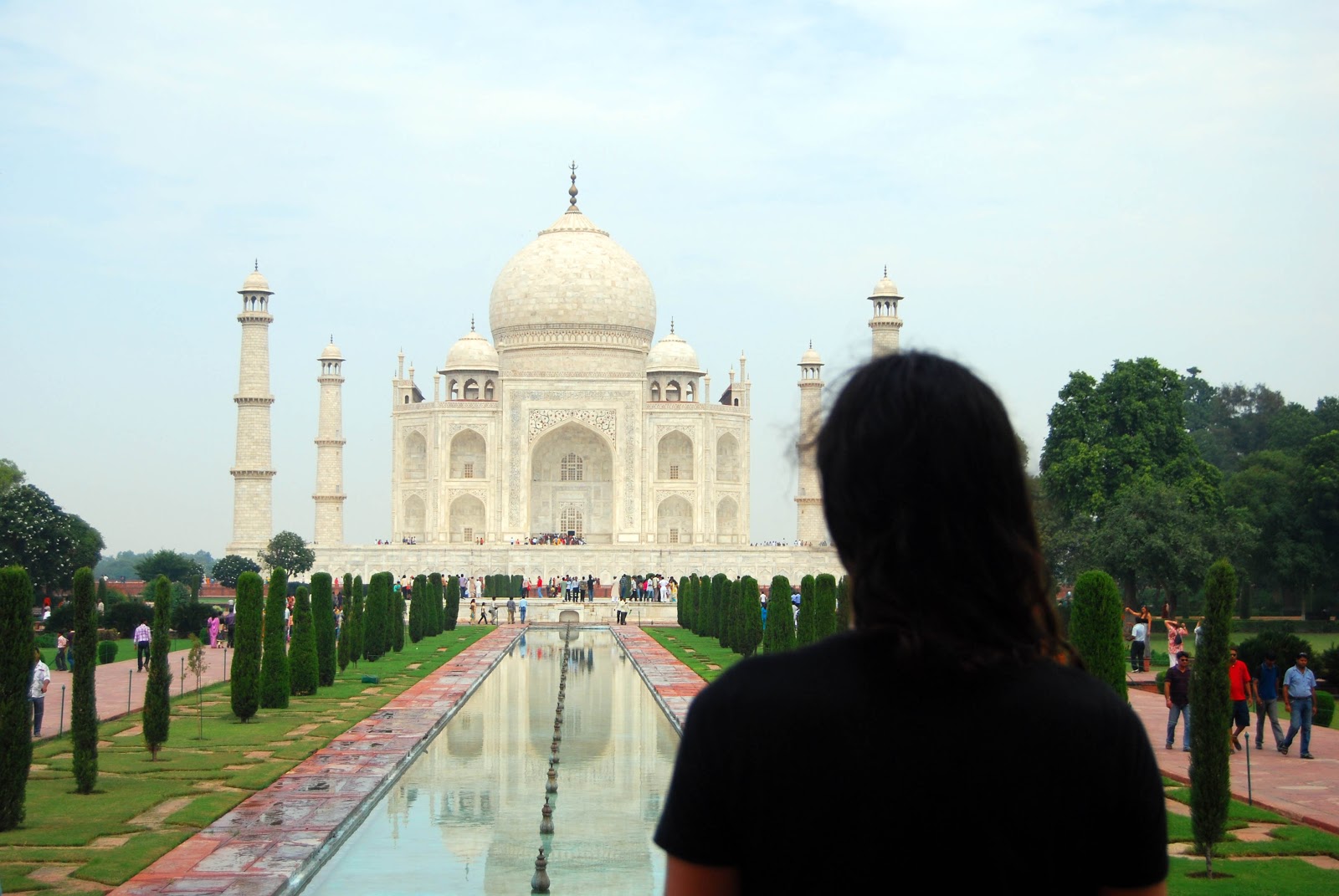
Wow... es... como... en las fotos. Wow... it´s... like... in the pics.

Sikh haciendo turismo. Sikh doing some tourism.

¿Dónde están mis rupias? Where are my rupees?


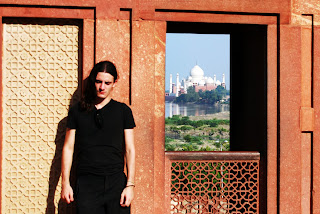
tomada desde la mezquita a la derecha del Taj. Taken form the mosque at the right of the Taj.
 
Fuerte de  Agra. Agra Fort.


4 Octubre 2010. No puedes ir a la India sin visitar el Taj Mahal. Más que nada por evitar dar explicaciones en un futuro, puesto que es la pregunta que todo el mundo hará. Me da un poco igual el Taj Mahal. Porque lo he visto mil veces. Porque está quemado. Así que un poco a regañadientes, me pongo los calcetines blancos con sandalias (merecería ser ejecutado si esto no fuera una metáfora) y me dirijo a Agra. Sorpresa, Agra es la madre de todos los timos. Se me presenta un conductor de rickshaws. Me enseña la cabina de prepago (normalmente una forma de evitar que el taxista te time) oficial para ir al Taj, su identificación oficial y la lista de precios oficiales en papel plastificado. Me quiere hacer creer que los indios pagan 400 rupias (6,6€) por ir al Taj, ir al Agra Fort (el fuerte) y volver a la estación. Le digo que no. Me hace descuento (300) por trabajar en una ONG y ayudar a su país. Estos son los más cabrones (con perdón): otro engaño para que caigas en la trampa. Al final tras discutir un rato me lleva por 50 rupias, auque más tarde me enteraría de que sigue siendo caro. Compro tabaco: la mujer me  devuelve mal el cambio dos veces y tengo que levantar la voz para que me lo dé bien porque se hace la tonta. A la vuelta cojo un cicle rickshaw (20 rupias) pedaleado por un hombre de unos 50 años. También me intentó engañar con el cambio y me llevó a una tienda de cámaras de fotos para que comprara una.
Pero el mayor de todos los engaños es que la entrada al Taj Mahal vale 750 rupias (12,5€) si eres extranjero y 20 (0,30€) si eres indio. El fuerte 300 rupias (5€) y otros 20 si eres indio. Y no, no funciona decirles que eres indio en hindi, sólo se ríen un poco de tí.
El Taj Mahal en sí no es ninguna sorpresa. No me enteré demasiado de lo que veía porque no cogí ningún guía (hasta las narices de guías, comisionistas e indios en busca de dinero), leí sobre ello a la vuelta. Al primer vistazo al Taj Mahal algo se mueve dentro. Es como volver a un sitio en el que estuviste en tu infancia, algo familiar y remoto a la vez. Tras la primera impresión, todo ordinario. Muy bonito, si, pero sigo pensando en mis rupias. El mausoleo no se puede fotografiar; es bonito pero tampoco para morirse.
El fuerte también es bonito, construido en ladrillo rojo y luego capturado por los mogoles. Habiendo en su día construcciones de madera y mobiliarios, no te haces a la idea de cómo podía ser. “Aquí había una sala de reuniones que lo flipas llena de oro y movidas”: una sala grande y vacía. “Aquí había un palacete de madera superchulo donde  el Raja se retiraba a meditar”: un gran vacío.
Entre los dos sitios me hice, sin exagerar, unas 10 fotos con indios. Unos me decían que parecía un músico (iba de negro con gafas de sol), otros que parecía muy “smart”, un hombre me pone a sus hijas a cada lado y no hace la foto hasta que no paso los brazos por los hombros de ambas a petición suya , otro me pidió que me volviera a poner las gafas de sol para la foto...


Para quellos aburridos, bajaros compraros la pelicula The Fall (El sueño de Alexandria) de Tarsem Singh. Tiene escenas rodadas en el fuerte de Agra, en Jaipur, en Jodhpur...

4th October 2010. You cannot go to India without visiting Taj Mahal. Mainly to avoid having to explain things, since it's the question that people will more likely be asking. I don't care that much about Taj Mahal. Because I've seen it tousands of times. Because it's burned out. Then, a bit reluctantly, I put my tourist cap and sunglases, take my camera and lead to Agra. Surprise: Agra is the biggest scam center on earth. A rickshaw driver comes to me. He shows me the official prepay booth (which is usually a good way to avoid taxis riping you off) for the Taj, his official driver identification card and the official prices list on a plastified paper. He's trying to make me believe that indians pay 400 rupees (6,6€) for going to Taj Mahal, then Agra Fort, then back to the station. I say no. He then makes a discount (300) because I'm working in an NGO and I'm helping his country. These ones are the most bastards (sorry): again he wants to fool me. After arguing for a while he takes me for 50 rupees, however I would know later that it's still expensive. I buy tobacco: hte woman gives me the wrong change twice and I have to raise my voice to have my money because she's pretending to not understand. When coming back I take a cicle riskshaw (20 rupees) driven by a 50 years old man. He tries to fool me with the change and brought me to a shop to buy a photo camera.
But the biggest scam is the entry fee for the Taj Mahal which costs 750 rupees (12,5€) for foreigners and 20 (0,30€) if you are indian, while Agra Fort is 300 rupees (5€) for foreigners and 20 again for indians. And no, saying that you're indian doens't work, they just laugh.
The Taj Mahal is not any surprise. I didn't know exacly all that I was seeing (shame) because I didn't take any guide (I'm fed up with guides, comissionists and indians looking for money), I read about it when coming back. The first glance to Taj Mahal makes something move inside you. It's like coming back to a place you went when you were kid, something familiar and remote at the same time. After the first impression, all is ordinary. Very beautiful, yeah, but I'm still thinking about my rupees. The mausoleum cannot be photographied. It's beautiful but not to die for.
The fort is beautiful too, built in red bricks and captured by the mogol empire. In his glory days it had wood constructions and furnitures, so you cannot figure out how it could be. "Here was an awesome meeting room full of gold and stuff": a big empty room. "Here was a small and groovy wood palace where the Raja was going for meditation": a big empty space.
During the visits I had around 10 pictures with indians. Some said that I looked like a musician (black clothes and sunglases), others that I looked smart, even a man put each of his two daughters at my sides and didn't take the picture until I didn't pass my arms around their shoulder at his request, a guy asked me to put back my sunglases for the picture...

For those who are bored, download purchase the movie The Fall by Tarsen Singh. It has scenes filmed in Agra Fort, Jaipur, Jodhpur...
Ostracismo.
Con Gabi en Pahar Ganj.

Delhi, 29 agosto 2010. La comunidad CS Bcn en el exilio organiza un LEM meeting en Delhi. Hay que matar a FerFidalgo.